
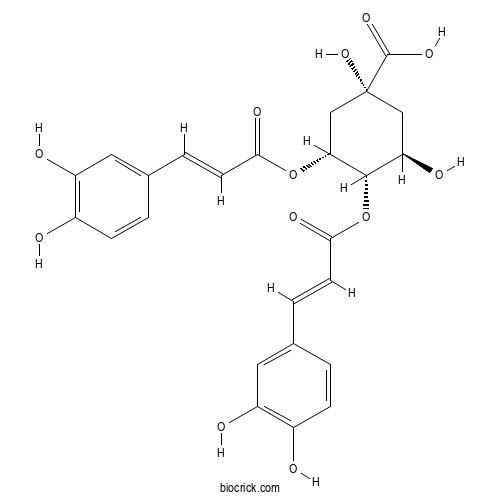
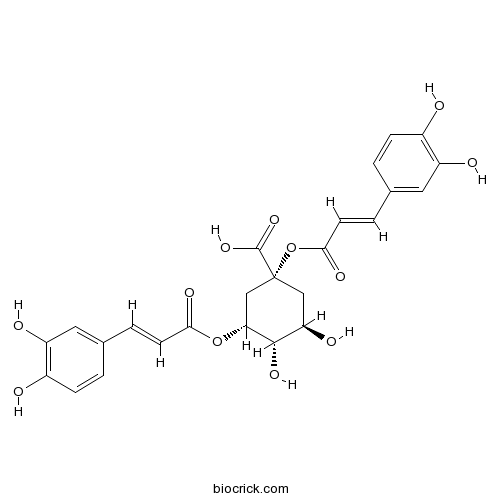
4,5-Di-O-caffeoylquinic acidCAS# 89886-30-6 |
| Cas No. | 89886-30-6 | SDF | File under preparation. |
| PubChem ID | 6474309.0 | Appearance | Powder |
| Formula | C25H24O12 | M.Wt | 516.4 |
| Type of Compound | N/A | Storage | Desiccate at -20°C |
| Solubility | Soluble in Chloroform,Dichloromethane,Ethyl Acetate,DMSO,Acetone,etc. | ||
| Chemical Name | (1R,3R,4S,5R)-3,4-bis[[(E)-3-(3,4-dihydroxyphenyl)prop-2-enoyl]oxy]-1,5-dihydroxycyclohexane-1-carboxylic acid | ||
| SMILES | C1C(C(C(CC1(C(=O)O)O)OC(=O)C=CC2=CC(=C(C=C2)O)O)OC(=O)C=CC3=CC(=C(C=C3)O)O)O | ||
| Standard InChIKey | UFCLZKMFXSILNL-RVXRWRFUSA-N | ||
| Standard InChI | InChI=1S/C25H24O12/c26-15-5-1-13(9-17(15)28)3-7-21(31)36-20-12-25(35,24(33)34)11-19(30)23(20)37-22(32)8-4-14-2-6-16(27)18(29)10-14/h1-10,19-20,23,26-30,35H,11-12H2,(H,33,34)/b7-3+,8-4+/t19-,20-,23+,25-/m1/s1 | ||
| General tips | For obtaining a higher solubility , please warm the tube at 37 ℃ and shake it in the ultrasonic bath for a while.Stock solution can be stored below -20℃ for several months. We recommend that you prepare and use the solution on the same day. However, if the test schedule requires, the stock solutions can be prepared in advance, and the stock solution must be sealed and stored below -20℃. In general, the stock solution can be kept for several months. Before use, we recommend that you leave the vial at room temperature for at least an hour before opening it. |
||
| About Packaging | 1. The packaging of the product may be reversed during transportation, cause the high purity compounds to adhere to the neck or cap of the vial.Take the vail out of its packaging and shake gently until the compounds fall to the bottom of the vial. 2. For liquid products, please centrifuge at 500xg to gather the liquid to the bottom of the vial. 3. Try to avoid loss or contamination during the experiment. |
||
| Shipping Condition | Packaging according to customer requirements(5mg, 10mg, 20mg and more). Ship via FedEx, DHL, UPS, EMS or other couriers with RT, or blue ice upon request. | ||
Quality Control & MSDS
3D structure
Package In Stock

Number of papers citing our products


4,5-Di-O-caffeoylquinic acid Dilution Calculator
4,5-Di-O-caffeoylquinic acid Molarity Calculator
-
 Isochlorogenic acid BCatalog No.: BCN5909CAS No.: 14534-61-3
-
 Isochlorogenic acid CCatalog No.: BCN2498CAS No.: 57378-72-0
-
 3,4,5-Tricaffeoylquinic acidCatalog No.: BCN2384CAS No.: 86632-03-3
-
 Cryptochlorogenic acidCatalog No.: BCN5907CAS No.: 905-99-7
-
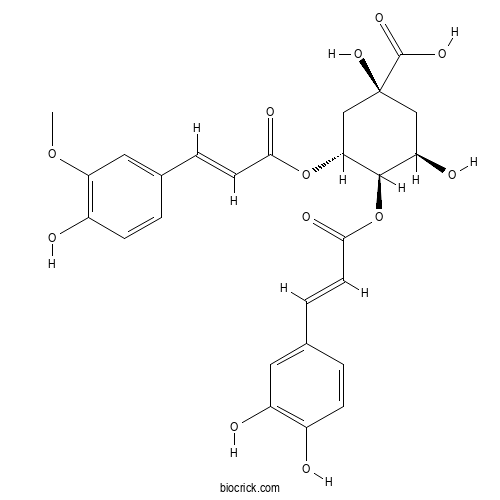 3-Feruloyl-4-caffeoylquinic acidCatalog No.: BCX1134CAS No.: 96990-65-7
-
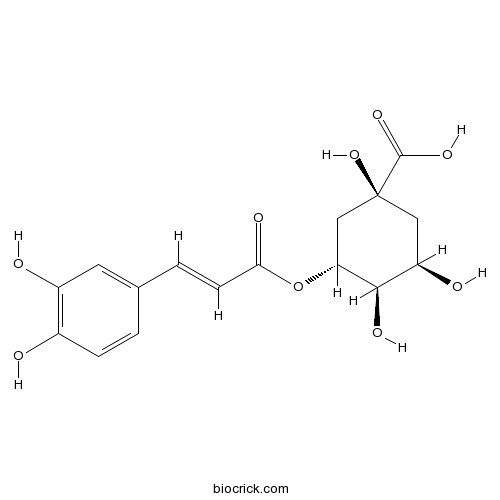 Chlorogenic acidCatalog No.: BCN5906CAS No.: 327-97-9
-
 Neochlorogenic acidCatalog No.: BCN4450CAS No.: 906-33-2
-
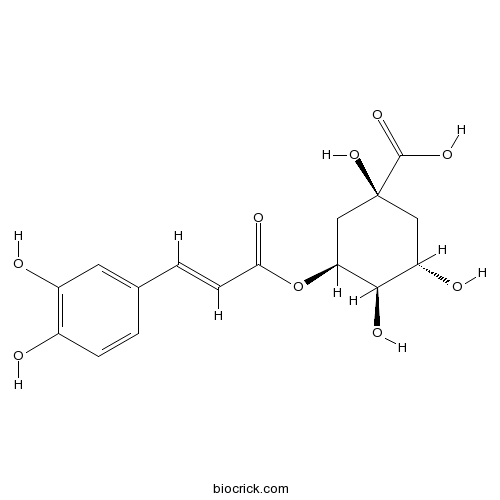 Isochlorogenic acidCatalog No.: BCN5910CAS No.: 534-61-2
-
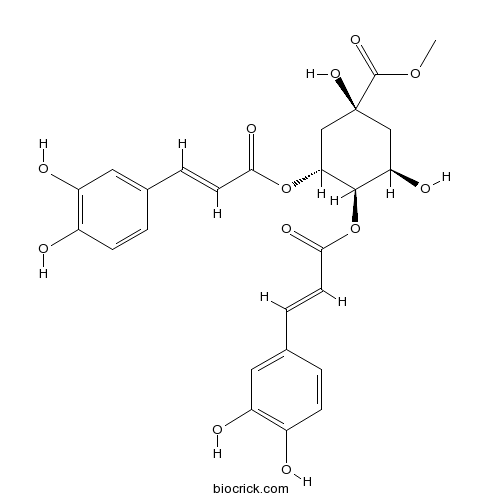 3,4-Di-O-caffeoylquinic acid methyl esterCatalog No.: BCN6490CAS No.: 114637-83-1
-
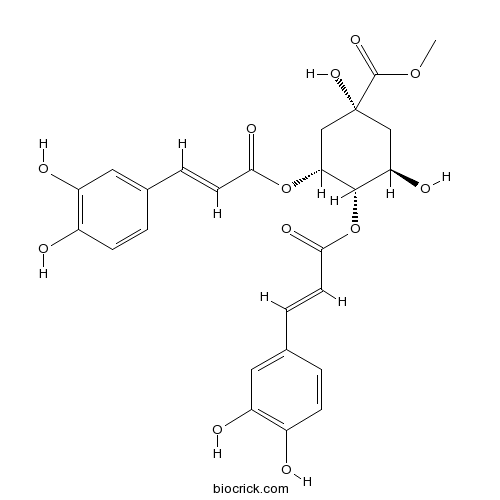 4,5-Di-O-caffeoylquinic acid methyl esterCatalog No.: BCN6492CAS No.: 188742-80-5
-
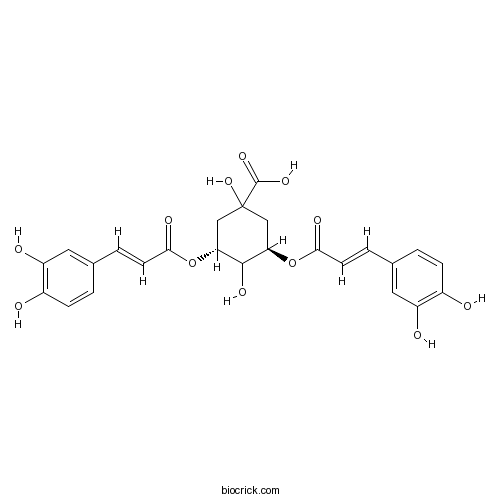 Isochlorogenic acid ACatalog No.: BCN5908CAS No.: 2450-53-5
-
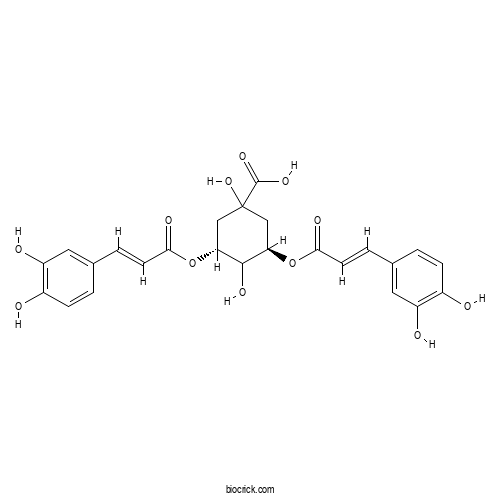 IsochlorogenicacidA 3,5-DicaffeoylquinicacidCatalog No.: BCX0962CAS No.: 89919-62-0
-
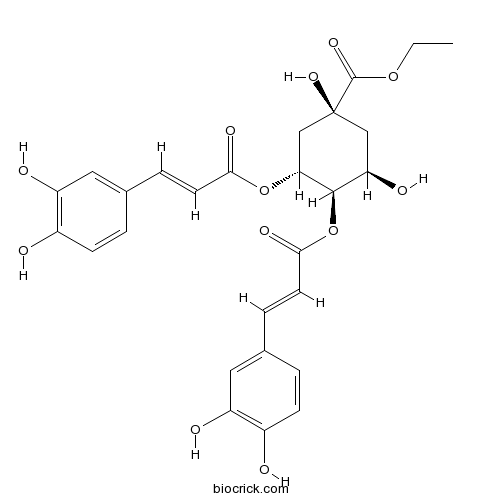 Ethyl 3,4-dicaffeoylquinateCatalog No.: BCN8004CAS No.: 143051-73-4
-
 Methyl 4-caffeoylquinateCatalog No.: BCN3442CAS No.: 123372-74-7
-
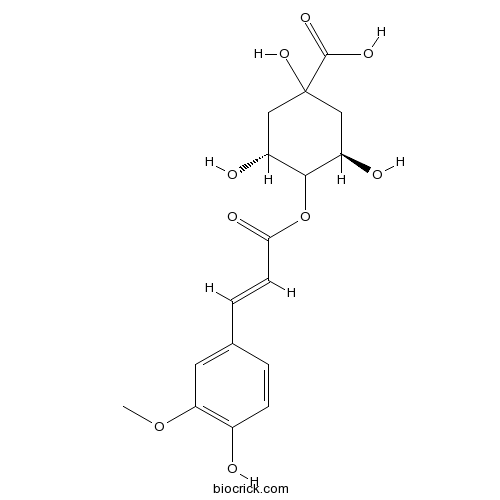 4-O-Feruloylquinic acidCatalog No.: BCN3352CAS No.: 2613-86-7
-
 1,4-Dicaffeoylquinic acidCatalog No.: BCN5912CAS No.: 1182-34-9
-
 4-p-CoumaroylquinicacidCatalog No.: BCX1100CAS No.: 1108200-72-1
-
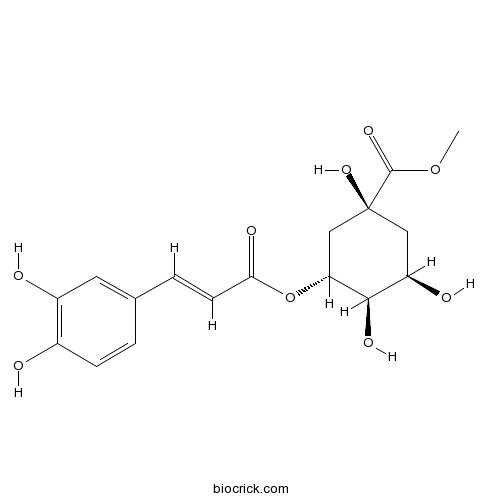 3-O-Caffeoylquinic acid methyl esterCatalog No.: BCN3484CAS No.: 123483-19-2
-
 Methyl chlorogenateCatalog No.: BCC9042CAS No.: 29708-87-0
-
 Neochlorogenic acid methyl esterCatalog No.: BCN8860CAS No.: 123410-65-1
-
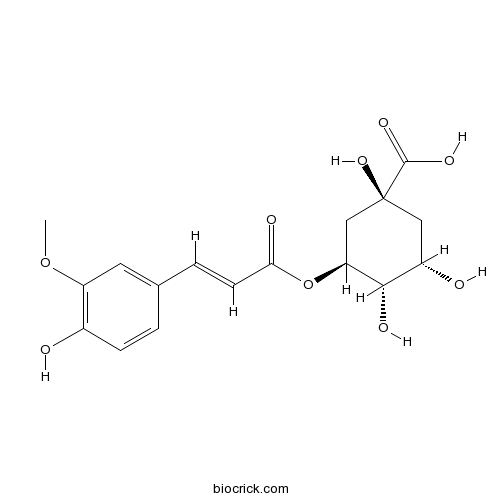 3-O-Feruloylquinic acidCatalog No.: BCN3353CAS No.: 1899-29-2
-
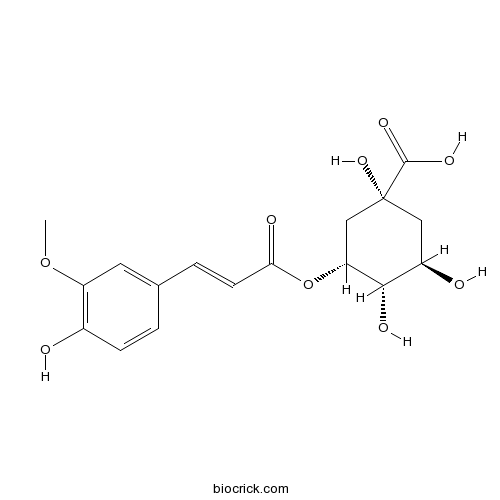 5-O-Feruloylquinic acidCatalog No.: BCN3788CAS No.: 40242-06-6
-
 4'-O-methyl-Chlorogenic acidCatalog No.: BCX1089CAS No.: 57496-29-4
-
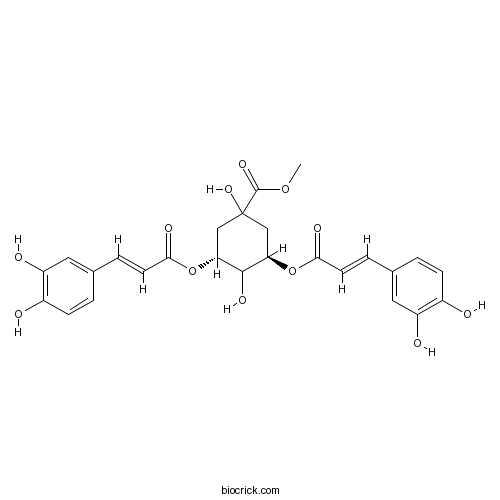 3,5-Di-O-caffeoylquinic acid methyl esterCatalog No.: BCN6491CAS No.: 159934-13-1
-
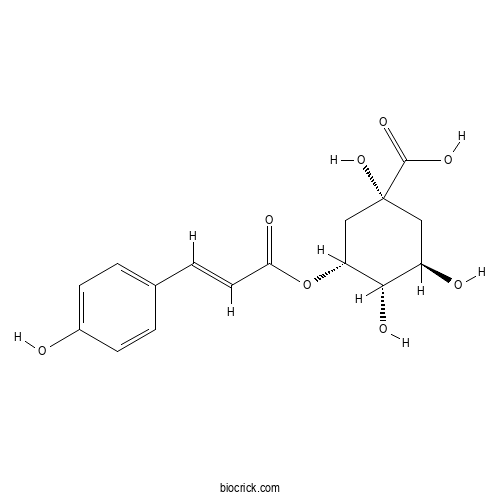 5-O-Coumaroylquinic acidCatalog No.: BCX0028CAS No.: 32451-86-8
-
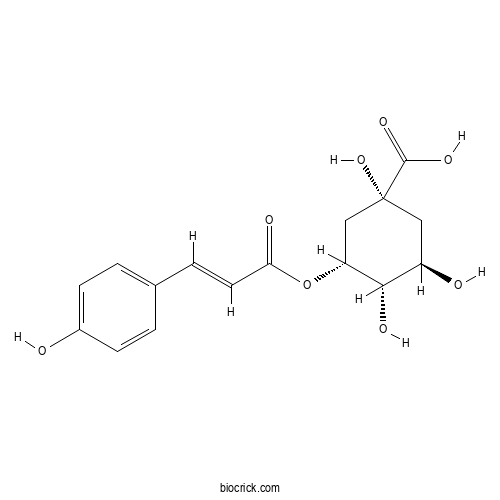 3-O-Coumaroylquinic acidCatalog No.: BCX0658CAS No.: 87099-71-6
-
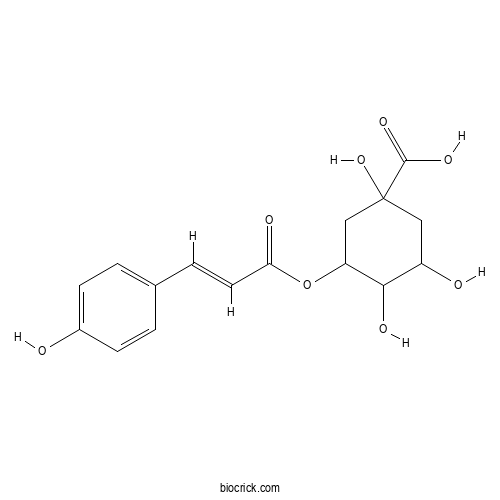 3-O-p-Coumaroylquinic acidCatalog No.: BCX0783CAS No.: 5746-55-4
-
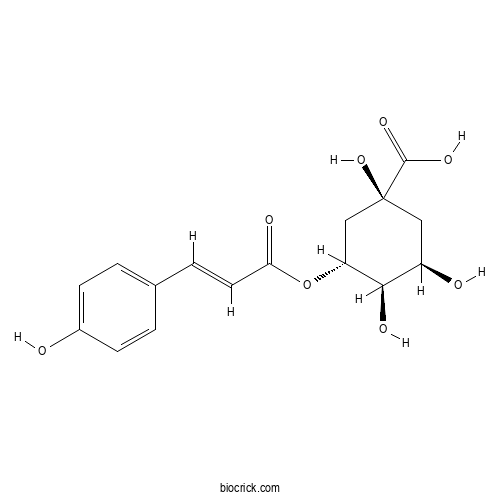 3-O-Coumaroylquinic acidCatalog No.: BCX1091CAS No.: 1899-30-5
-
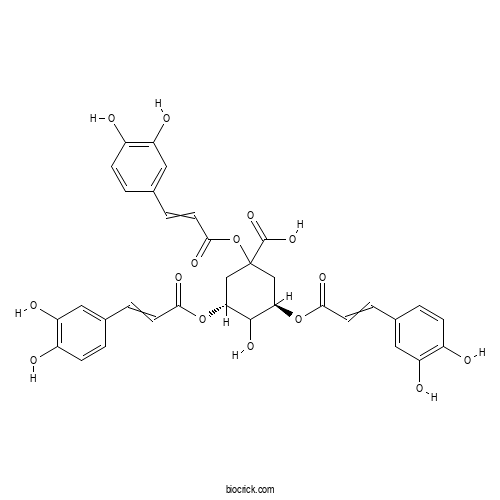 1,3,5-tricaffeoylquinic acidCatalog No.: BCN0861CAS No.: 1073897-80-9
-
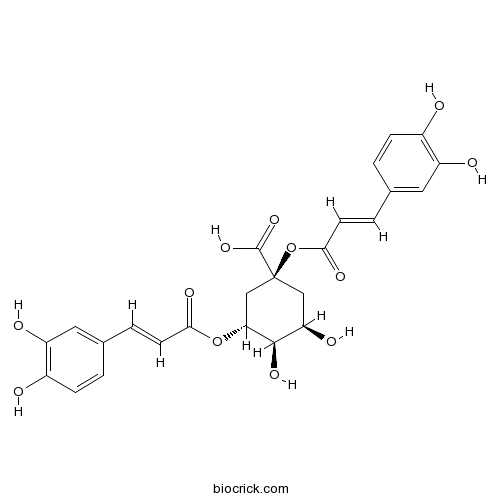 1,3-Dicaffeoylquinic acidCatalog No.: BCN2972CAS No.: 19870-46-3
-
 1,5-Dicaffeoylquinic acidCatalog No.: BCN5913CAS No.: 30964-13-7
| 1 mg | 5 mg | 10 mg | 20 mg | 25 mg | |
| 1 mM | 1.9365 mL | 9.6824 mL | 19.3648 mL | 38.7297 mL | 48.4121 mL |
| 5 mM | 0.3873 mL | 1.9365 mL | 3.873 mL | 7.7459 mL | 9.6824 mL |
| 10 mM | 0.1936 mL | 0.9682 mL | 1.9365 mL | 3.873 mL | 4.8412 mL |
| 50 mM | 0.0387 mL | 0.1936 mL | 0.3873 mL | 0.7746 mL | 0.9682 mL |
| 100 mM | 0.0194 mL | 0.0968 mL | 0.1936 mL | 0.3873 mL | 0.4841 mL |
| * Note: If you are in the process of experiment, it's necessary to make the dilution ratios of the samples. The dilution data above is only for reference. Normally, it's can get a better solubility within lower of Concentrations. | |||||
- 4-(2-(Carboxymethyl)-3,5-dihydroxyphenoxy)benzoic acid
Catalog No.:BCX2259
CAS No.:2193189-82-9
- Lobetyolin
Catalog No.:BCX2258
CAS No.:129277-38-9
- Benzil
Catalog No.:BCX2257
CAS No.:134-81-6
- Tryptamine
Catalog No.:BCX2256
CAS No.:61-54-1
- Coniferyl acetate
Catalog No.:BCX2255
CAS No.:94930-81-1
- Scinamine C
Catalog No.:BCX2254
CAS No.:2184979-75-5
- 3''-Hydroxypyrrolezanthine
Catalog No.:BCX2253
CAS No.:2647391-04-4
- Lyxose
Catalog No.:BCX2252
CAS No.:65-42-9
- 3'-O-Methylhesperidin
Catalog No.:BCX2251
CAS No.:28034-80-2
- Benzoic acid,2-[(5,10-dihydro-3,7,8-trihydroxy-5,10-dioxo...
Catalog No.:BCX2910
CAS No.:60202-70-2
- Osmanthuside B
Catalog No.:BCX2909
CAS No.:94492-23-6
- Podoverine A
Catalog No.:BCX2908
CAS No.:107882-43-9
- Malic acid
Catalog No.:BCX2261
CAS No.:636-61-3
- Picropodophyllin
Catalog No.:BCX2262
CAS No.:477-47-4
- α-Santalene
Catalog No.:BCX2263
CAS No.:512-61-8
- Valerianol
Catalog No.:BCX2264
CAS No.:20489-45-6
- 7-epi-Teucrenone
Catalog No.:BCX2265
CAS No.:165898-48-6
- Isosyringinoside
Catalog No.:BCX2266
CAS No.:152686-85-6
- Taccalonolide Q
Catalog No.:BCX2267
CAS No.:488791-19-1
- 7-O-Galloyltricetiflavan
Catalog No.:BCX2268
CAS No.:889447-89-6
- (2E,7E)-6,9-Dihydroxy-N-isobutyldeca-2,7-dienamide
Catalog No.:BCX2269
CAS No.:1492015-24-3
- (2E,7E)-6,9-Dihydroxy-N-isobutyldeca-2,7-dienamide
Catalog No.:BCX2270
CAS No.:1383715-05-6
- (2E,6Z)-8,9-Dihydroxy-N-isobutyldeca-2,6-dienamide
Catalog No.:BCX2271
CAS No.:1492015-25-4
- 1β,4β-Dihydroxy-11,12,13-trinoreudesm-5-en-7-one
Catalog No.:BCX2272
CAS No.:2170107-68-1
Extracts of Baccharis conferta Kunth Reduce Carrageenan-Induced Paw Edema in Mice and Inhibit NF-kappaB in LPS-Stimulated RAW-Blue Macrophages.[Pubmed:42570272]
Chem Biodivers. 2026 Aug;23(8):e71570.
This study evaluated the anti-inflammatory effects and chemical profiles of hexane (BcH), dichloromethane (BcD), and methanol (BcM) extracts from Baccharis conferta using LPS-stimulated RAW-Blue macrophages and a carrageenan-induced paw edema model in mice. GC/MS analysis of BcH identified heptacosane (30.89%), 3beta-myristoylolean-12-en-16beta-ol (7.88%), and spathulenol (5.8%) as major components. UPLC-MS analysis showed distinct profiles for BcD and BcM extracts; BcD was characterized by flavonoids such as cirsimaritin, acacetin, and pectolinaringenin, while BcM contained chlorogenic acids (5-O-caffeoylquinic acid, 1-O-caffeoylquinic acid, 3,4-di-O-caffeoylquinic acid, and 4,5-Di-O-caffeoylquinic acid), and flavonoids (vicenin-2 and rutin). In vivo, oral administration of all extracts (100 mg/kg) reduced paw edema, with BcD and BcM significantly decreasing paw swelling from 3 h onward, with effects comparable to those of the reference drug meloxicam (P < 0.05), while BcH showed lower activity. In vitro, the effects of the extracts were assessed using SEAP reporter activity as an indicator of NF-kappaB/AP-1 signaling. BcD and BcM significantly reduced SEAP activity in a concentration-dependent manner, whereas BcH showed a lower inhibitory effect. Overall, extracts of B. conferta exert anti-inflammatory activity by modulating NF-kappaB/AP-1 signaling. These findings support the potential of B. conferta as a promising candidate for treating inflammatory diseases.
Anti-Obesity Activity of Giant Centella asiatica Lava Seawater Extract (GCA-LS-90) Through Regulation of Adipocyte Differentiation and Lipid Metabolism In Vitro.[Pubmed:41828505]
Int J Mol Sci. 2026 Feb 28;27(5):2287.
Obesity is well-known as a major risk factor for metabolic disorders, and natural compounds are being explored as alternatives to conventional therapies. While Centella asiatica is well known for its medicinal and dietary benefits, the biological activities of Giant Centella asiatica (GCA), especially when extracted with mineral-rich lava seawater, remain poorly characterized. This study aimed to evaluate the anti-adipogenic and lipid-metabolism-regulating effects of a novel GCA extract (GCA-LS-90) and its ability to stimulate GLP-1 secretion in vitro. GCA-LS-90 significantly inhibited lipid accumulation in 3T3-L1 adipocytes by up to 24.3% at 200 microg/mL (p < 0.001). It downregulated adipogenic transcription factors (C/EBPbeta, C/EBPalpha, PPARgamma) and lipogenic regulators (SREBP1c, FAS, G6PD, ME), while upregulating KLF2 (all p < 0.001). Western blotting confirmed reduced SREBP1c and SREBP2 protein expression, increased phosphorylation of AMPKalpha/ACC, and enhanced HSL activity (p < 0.05-0.001). In STC-1 cells, GCA-LS-90 increased GLP-1 secretion (53.5 pmol/L at 90 microg/mL vs. 41.3 pmol/L in control, p < 0.001). The major compounds, 3,5- and 4,5-Di-O-caffeoylquinic acids, reproduced these effects. In conclusion, GCA-LS-90 modulated adipogenesis-, lipid-metabolism-, and GLP-1 secretion-related pathways in vitro, suggesting its potential as a functional ingredient for obesity management. Further in vivo studies are needed to confirm efficacy and translational relevance.
Caffeoylquinic acid derivatives isolated from Tussilago farfara L. as potential anti-leishmanial agents; in vitro and in silico studies.[Pubmed:41566996]
Nat Prod Res. 2026 Jan 22:1-9.
Leishmaniasis affects millions of people in tropical and subtropical regions. Currently, only a few medications are available for its treatment, many of which cause adverse effects. Therefore, the development of effective, and safer drugs is urgently needed. Leishmania major Pteridine reductase-1 (LmPTR-1) is a vital enzyme for parasite survival, and thus serves as a valid drug target. Our investigation on the ethanolic extract of Tussilago farfara L. resulted in the isolation of twenty known phenolic compounds 1-20. Among them, vanillic acid (1), 1S,3R,4R,5R)-3,5-di-O-caffeoylquinic acid (14), and 3,4,5-tri-O-caffeoylquinic acid methyl ester (20) are first time reported here. Compounds (1S,3R,4S,5R)-3,5-di-O-caffeoylquinic acid (15), 3,4-di-O-caffeoylquinic acid (16), 4,5-Di-O-caffeoylquinic acid (17), and 3,4-di-O-caffeoylquinic acid methyl ester (18) exhibited LmPTR-1 inhibition with IC(50) between 81.9-189.7 muMu. In silico studies further revealed strong interactions between compounds 15-18, and LmPTR-1 enzyme. In summary, quinic acid derivatives, containing caffeoyl moieties can serve as potential as anti-leishmanial agents.
Gender-related phytochemical variation on Baccharis dracunculifolia DC. from two populations.[Pubmed:41259439]
An Acad Bras Cienc. 2025 Nov 14;97(4):e20241220.
Baccharis dracunculifolia DC. is a dioecious shrub native to South America and the main botanical source of green propolis, an important commercial and medicinal product produced by Apis mellifera L. This study evaluated the phytochemical composition and antioxidant activity of hydroethanolic extracts and essential oils from male and female plants collected from different populations. This is the first comparative analysis of genders from different populations, focusing on artepillin C, the main compound of industrial interest. Leaf extracts were analyzed by HPLC-DAD and LC-MS, while hydrodistilled essential oils were assessed using GC-FID and GC-MS. Antioxidant activity was measured using DPPH and ABTS assays. A total of 31 compounds were detected in the extracts, with 17 identified. Major constituents included 3,5-di-Ocaffeoylquinic acid , 4,5-Di-O-caffeoylquinic acid, and artepillin C. Essential oils were rich in oxygenated sesquiterpenes, monoterpene and sesquiterpene hydrocarbons, with (E)- nerolidol, beta-pinene, and limonene as the main volatiles. Male plants exhibited higher levels of non-volatile compounds, greater essential oil content, and stronger antioxidant activity in both extracts and oils. The highest artepillin C concentration was found in male leaves from both studied populations. These findings highlight the influence of gender and environment on the phytochemical profile, reinforcing its potential for highquality natural products.
Selective Enhancement of Caffeoylquinic Acid Derivative via UV Irradiation and Validation of Analytical Method in the Aerial Aster x chusanensis Y. S. Lim.[Pubmed:41048756]
ACS Omega. 2025 Sep 22;10(38):44260-44269.
Aster x chusanensis Y.S.Lim is equipped with mass plant growth strategies that can potentially develop into functional foods. A. chusanensis was grown on a vertical farm until it was budding. The plants were transported to a growth chamber equipped with ultraviolet (UV)-A and UV-B lights and irradiated for 48 h. The base peak intensity (BPI) of the A. chusanensis control displayed eight predominant metabolites, namely, 3-O-caffeoylquinic acid, rutin, 3,4-di-O-caffeoylquinic acid, 3,5-di-O-caffeoylquinic acid, biorobin, luteolin-7-O-beta-glucoside, 4,5-Di-O-caffeoylquinic acid, and luteolin, as identified using LC-Q-TOF/MS analysis. UV-A-irradiated A. chusanensis showed an increase in the content of caffeoylquinic acid (CQA) derivatives (peaks 1, 3, 4, and 7). Thus, CQA-enhanced A. chusanensis, treated with UV-A irradiation, was used to develop analytical validation methods using HPLC-DAD. Quantitative analysis of the CQA derivatives was conducted based on the developed analytical method. The requirements for specificity, linearity, accuracy, and precision were met in accordance with the Korea Food and Drug Administration (KFDA) and the Association of Official Agricultural Chemists (AOAC) guidelines. The total contents of CQA derivatives in A. chusanensis were improved by approximately 2.2 times (from 17,081 to 37,243 mug/g) following the UV-A irradiation treatment.
Haustorium Formation and Specialized Metabolites Biosynthesis Using Co-Culture of Castilleja tenuiflora Benth. and Baccharis conferta Kunth.[Pubmed:40906137]
Biology (Basel). 2025 Aug 4;14(8):990.
In this study, an in vitro co-culture system of Castilleja tenuiflora and its host, Baccharis conferta, was used, and the impact of their interaction on specialized metabolite content was analyzed. After 4 weeks of co-culture, haustoria formation was verified through environmental scanning electron and confocal microscopy, confirming the successful establishment of the plant-plant interaction. Shoot height and biomass of the aerial part of the hemiparasite were not affected significantly by co-culture. However, root biomass increased by 53% compared to individually grown plants. Co-culture significantly reduced the host's root length without negatively affecting its overall growth or survival. Phytochemical profile alterations were observed in both species. For C. tenuiflora, the lignans sesamin and eudesmin are proposed as differentially accumulated metabolites, while in B. conferta, the caffeoylquinic acid, 4,5-Di-O-caffeoylquinic acid, and the flavonoid acacetin were expressed differently. The development and chemical profiles of B. conferta and C. tenuiflora change when they grow in a co-culture because of the host-parasite interaction. Here, we report the feasibility of using a hemiparasite-host system to investigate more profound research questions. Future biotechnological applications of this system include elucidating the genetic regulators involved in haustorium formation, as well as optimizing environmental and physiological conditions to enhance its biosynthetic capacity for the production of specialized metabolites with therapeutic value.
Targeted Screening of Cyclooxygenase-2 Inhibitors From Dendropanax dentiger Root Using Affinity Ultrafiltration Coupled With UHPLC-MS.[Pubmed:40062490]
Chem Biodivers. 2025 Jul;22(7):e202500090.
Cyclooxygenase-2 (COX-2) plays a critical role in the pathogenesis of rheumatoid arthritis (RA), whereas Dendropanax dentiger root (DDR) is a traditional Chinese medicine (TCM) widely used to treat RA. However, the specific bioactive compounds responsible for its therapeutic effect remain unidentified. In this study, affinity ultrafiltration coupled with liquid chromatography and mass spectrometry (AUF-LC-MS) was employed to screen for COX-2 inhibitors in DDR. Targeted compounds were identified by analyzing MS data and comparing them with reference standards. Molecular docking, molecular dynamics simulation, and enzyme inhibition assays were conducted to validate the COX-2 inhibitory effects of the identified compounds. As a result, 10 phenylpropanoids, including neochlorogenic acid, chlorogenic acid, cryptochlorogenic acid, liriodendrin, isochlorogenic acid B, isochlorogenic acid A, eleutheroside E1, isochlorogenic acid C, 3,5-di-O-caffeoylquinic acid methyl ester, and 4,5-Di-O-caffeoylquinic acid methyl ester, were identified as potential COX-2 inhibitors in DDR using AUF-LC-MS. Mass spectrometric fragmentation patterns of these compounds were analyzed, revealing consistent and logical fragmentation profiles. Molecular docking results revealed that all 10 compounds exhibited strong binding affinities for COX-2, with binding energies ranging from -8.0 to -9.8 kcal/mol. The results of molecular dynamics simulations further supported molecular docking's findings. Further experimental validation confirmed that these compounds exhibited potent COX-2 inhibitory activity, with IC(50) values ranging from 5.2 to 10.3 microM. These compounds are likely to represent the primary anti-inflammatory components of DDR. Additionally, this study systematically identifies chlorogenic acids within the Dendropanax genus and investigates their mass spectrometric fragmentation patterns. The findings contribute to the scientific basis for the clinical application of DDR.
Integrating ADMET, enrichment analysis, and molecular docking approach to elucidate the mechanism of Artemisia herba alba for the treatment of inflammatory bowel disease-associated arthritis.[Pubmed:39028276]
J Toxicol Environ Health A. 2024 Oct 17;87(20):836-854.
Inflammatory Bowel Disease-Associated Arthritis (IBD-associated arthritis) poses a significant challenge, intertwining the complexities of both inflammatory bowel disease (IBD) and arthritis, significantly compromising patient quality of life. While existing medications offer relief, these drugs often initiate adverse effects, necessitating the requirement for safer therapeutic alternatives. Artemisia herba-alba, a traditional medicinal plant known for its anti-inflammatory properties, emerges as a potential candidate. Our computational study focused on examining 20 bioactive compounds derived from A. herba-alba for potential treatment of IBD-associated arthritis. These compounds detected in A. herba-alba include camphor, alpha-thujone, eucalyptol, cis-chrysanthenyl acetate, vicenin-2, 4,5-Di-O-caffeoylquinic acid, chlorogenic acid, hispidulin, isoschaftoside, isovitexin, patuletin-3-glucoside, vanillic acid, rutin, schaftoside, lopinavir, nelfinavir, quercetin, artemisinin, gallic acid, and cinnamic acid. Following rigorous analysis encompassing pharmacokinetics, toxicity profiles, and therapeutic targets, compounds with favorable, beneficial characteristics were identified. In addition, comparative analysis with disease-gene associations demonstrated the interconnectedness of inflammatory pathways across diseases. Molecular docking studies provided mechanistic insights indicating this natural plant components potential to modulate critical inflammatory pathways. Overall, our findings indicate that A. herba-alba-derived compounds may be considered as therapeutic agents for IBD-associated arthritis, warranting further experimental validation and clinical exploration.
Light-Emitting Diodes and Liquid System Affect the Caffeoylquinic Acid Derivative and Flavonoid Production and Shoot Growth of Rhaponticum carthamoides (Willd.) Iljin.[Pubmed:38731636]
Molecules. 2024 May 5;29(9):2145.
Plant in vitro cultures can be an effective tool in obtaining desired specialized metabolites. The purpose of this study was to evaluate the effect of light-emitting diodes (LEDs) on phenolic compounds in Rhaponticum carthamoides shoots cultured in vitro. R. carthamoides is an endemic and medicinal plant at risk of extinction due to the massive harvesting of its roots and rhizomes from the natural environment. The shoots were cultured on an agar-solidified and liquid-agitated Murashige and Skoog's medium supplemented with 0.1 mg/L of indole-3-acetic acid (IAA) and 0.5 mg/L of 6-benzyladenine (BA). The effect of the medium and different treatments of LED lights (blue (BL), red (RL), white (WL), and a combination of red and blue (R:BL; 7:3)) on R. carthamoides shoot growth and its biosynthetic potential was observed. Medium type and the duration of LED light exposure did not affect the proliferation rate of shoots, but they altered the shoot morphology and specialized metabolite accumulation. The liquid medium and BL light were the most beneficial for the caffeoylquinic acid derivatives (CQAs) production, shoot growth, and biomass increment. The liquid medium and BL light enhanced the content of the sum of all identified CQAs (6 mg/g DW) about three-fold compared to WL light and control, fluorescent lamps. HPLC-UV analysis confirmed that chlorogenic acid (5-CQA) was the primary compound in shoot extracts regardless of the type of culture and the light conditions (1.19-3.25 mg/g DW), with the highest level under R:BL light. BL and RL lights were equally effective. The abundant component was also 3,5-di-O-caffeoylquinic acid, accompanied by 4,5-Di-O-caffeoylquinic acid, a tentatively identified dicaffeoylquinic acid derivative, and a tricaffeoylquinic acid derivative 2, the contents of which depended on the LED light conditions.
Chromatographic Evaluation and Characterization of Constituents of Sunflower Seed Extract Used as Food Additives.[Pubmed:38233137]
Chem Pharm Bull (Tokyo). 2024;72(1):93-97.
Sunflower seed extract, an antioxidant agent registered on the List of Existing Food Additives in Japan, was evaluated using HPLC, and three common constituents were detected. These peaks were identified as monocaffeoylquinic acids (3-O-caffeoylquinic acid, 4-O-caffeoylquinic acid, and 5-O-caffeoylquinic acid [chlorogenic acid]). Upon scrutinizing other components, dicaffeoylquinic acids (isochlorogenic acids; 3,4-di-O-caffeoylquinic, 3,5-di-O-caffeoylquinic, and 4,5-Di-O-caffeoylquinic acids) were also identified. Structures of two newly isolated compounds were determined to be 3-O-(3S-2-oxo-3-hydroxy-indole-3-acetyl)-5-O-caffeoylquinic and 4-O-(3S-2-oxo-3-hydroxy-indole-3-acetyl)-5-O-caffeoylquinic acids. To identify the components that contribute to the antioxidant activity of sunflower seed extract, we fractionated the food additive sample solution and examined the active fractions for 2,2-diphenyl-1-picrylhydrazyl (DPPH) radical scavenging activity. Monocaffeoylquinic and dicaffeoylquinic acids showed high DPPH activity, including their contribution to the antioxidant activity of this food additive. DPPH radical scavenging activity of the new compounds showed almost the same value as that of the positive control, Trolox. Therefore, the contribution of these compounds was also considered.
Vernonia britteniana Root Phytochemical Studies, In Vitro Cercaricidal Activity on the Larval Stage of Schistosoma mansoni and Antioxidant Activities.[Pubmed:37176846]
Plants (Basel). 2023 Apr 27;12(9):1788.
Vernonia britteniana Hiern. (Asteraceae) is a medicinal plant used in traditional Angolan medicine against schistosomiasis. Our study aimed to investigate the phytochemical composition and the cercaricidal and antioxidant activities in vitro of a traditional herbal preparation (Water-Vbr) and a 70% hydroethanolic extract (EtOH70%-Vbr) prepared with this medicinal plant. The activity of the extracts against Schistosoma mansoni cercariae was assessed at different extract concentrations (500, 438, and 125 microg/mL) and at different time intervals, and the phytochemical profiles were obtained by LC-UV-ESI/MS-MS. In addition, the major chemical classes of the identified metabolites were quantified by colorimetry, and the antioxidant potential was assessed using the DPPH and FRAP methods. After 30 min, 100% cercarial mortality was observed at a concentration of 500 mug/mL after exposure, and after 120 min, an LC(50) of 438 mug/mL was observed for both extracts. Phenolic acid derivatives (chlorogenic acid, caffeic acid; 3,4-di-O-caffeoylquinic acid; 3,5-di-O-caffeoylquinic acid; and 4,5-Di-O-caffeoylquinic acid) and triterpenoids (stigmastane-type steroidal saponins; vernoamyoside D and vernonioside D1; vernoamyoside B; and vernoniamyoside A and C) were identified as the main secondary metabolites. The Water-Vbr extract showed the highest antioxidant activity-DPPH: IC(50) = 1.769 +/- 0.049 microg/mL; FRAP: mean = 320.80 +/- 5.1325 microgAAE/g.
Chemical Constituents from Leaves of Baccharis sphenophylla (Asteraceae) and Their Antioxidant Effects.[Pubmed:36986952]
Plants (Basel). 2023 Mar 10;12(6):1262.
Baccharis is one of the largest genera of Asteraceae and its species are used in folk medicine for several medicinal purposes due to the presence of bioactive compounds. We investigated the phytochemical composition of polar extracts of B. sphenophylla. Using chromatographic procedures, diterpenoids (ent-kaurenoic acid), flavonoids (hispidulin, eupafolin, isoquercitrin, quercitrin, biorobin, rutin, and vicenin-2), caffeic acid, and chlorogenic acid derivatives (5-O-caffeoylquinic acid and its methyl ester, 3,4-di-O-caffeoylquinic acid, 4,5-Di-O-caffeoylquinic acid, and 3,5-di-O-caffeoylquinic acid and its methyl ester) were isolated from polar fractions and are described. The extract, polar fractions, and fifteen isolated compounds were evaluated in relation to radical scavenging activity using two assays. Chlorogenic acid derivatives and flavonols exhibited higher antioxidant effects, confirming that B. sphenophylla is an important source of phenolic compounds with antiradical properties.
Bioassay guided isolation of caffeoylquinic acids from the leaves of Ilex pubescens Hook. et Arn. and investigation of their anti-influenza mechanism.[Pubmed:36868436]
J Ethnopharmacol. 2023 Jun 12;309:116322.
ETHNOPHARMACOLOGICAL RELEVANCE: Ilex pubescens Hook. et Arn. (Maodongqing, MDQ) is a common herbal tea ingredient in Southern China for heat clearance and anti-inflammation. Our preliminary screening showed that 50% ethanol extract of its leaves has anti-influenza virus activity. In this report, we proceed to identify the active components and clarify the related anti-influenza mechanisms. AIM: We aim to isolate and identify the anti-influenza virus phytochemicals from the extract of the MDQ leaves, and study their anti-influenza virus mechanism. MATERIAL AND METHODS: Plaque reduction assay was used to test the anti-influenza virus activity of fractions and compounds. Neuraminidase inhibitory assay was used to confirm the target protein. Molecular docking and reverse genetics were used to confirm the acting site of caffeoylquinic acids (CQAs) on viral neuraminidase. RESULTS: Eight CQAs, 3,5-di-O-caffeoylquinic acid methyl ester (Me 3,5-DCQA), 3,4-di-O-caffeoylquinic acid methyl ester (Me 3,4-DCQA), 3,4,5-tri-O-caffeoylquinic acid methyl ester (Me 3,4,5-TCQA), 3,4,5-tri-O-caffeoylquinic acid (3,4,5-TCQA), 4,5-Di-O-caffeoylquinic acid (4,5-DCQA), 3,5-di-O-caffeoylquinic acid (3,5-DCQA), 3,4-di-O-caffeoylquinic acid (3,4-DCQA), and 3,5-di-O-caffeoyl-epi-quinic acid (3,5-epi-DCQA) were identified from the MDQ leaves, in which Me 3,5-DCQA, 3,4,5-TCQA and 3,5-epi-DCQA were isolated for the first time. All these eight compounds were found to inhibit neuraminidase (NA) of influenza A virus. The results of molecular docking and reverse genetics indicated that 3,4,5-TCQA interacted with Tyr100, Gln412 and Arg419 of influenza NA, and a novel NA binding groove was found. CONCLUSION: Eight CQAs isolated from the leaves of MDQ were found to inhibit influenza A virus. 3,4,5-TCQA was found to interact with Tyr100, Gln412 and Arg419 of influenza NA. This study provided scientific evidence on the use of MDQ for treating influenza virus infection, and laid the foundation for the development of CQA derivatives as potential antiviral agents.
Development and Validation of an On-Line HPLC-DAD-Antioxidant Assay (ORAC)/ESI-HRMS System to Identify Antioxidant Compounds in Complex Mixtures.[Pubmed:36752411]
J Chromatogr Sci. 2023 Jul 9;61(6):530-538.
An online high-performance liquid-chromatography-diode-array detector coupled with detection of antioxidant compounds using oxygen radical absorbance capacity (ORAC) assay and electrospray ionization-high-resolution mass spectrometer (HPLC-DAD-antioxidant assay (ORAC)/ESI-HRMS) was developed for the identification of antioxidant compounds in complex mixtures. The method was validated using quercetin and a mixture of antioxidant compounds with different antioxidant activities (resveratrol, dihydroxymethoxy-dihydrochalcone, ferulic acid, baicalein and luteolin). Accuracy of the system was established by comparing the results from the developed system with those from ORAC microplate assay determination and reveals the ability of the system to determine the respective contribution of antioxidant compounds to the whole activity of complex mixtures. Application of the system to the identification of antioxidants in a commercial Yerba Mate extract (Ilex paraguariensis St. Hil.) reveals the occurrence of seven actives, which were characterized as chlorogenic acids isomers (3-O-caffeoylquinic acid, 4-O-caffeoylquinic acid and 5-O-caffeoylquinic acid), dicaffeoylquinic acid isomers (3,4-di-O-caffeoylquinic acid, 3,5-di-O-caffeoylquinic acid and 4,5-Di-O-caffeoylquinic acid) and rutin based on UV/Vis spectra, HRMS and MS/MS data. This on-line system is able to generate HPLC-DAD fingerprints, UV/Vis spectra, ORAC activity profile and high-resolution mass spectrometric data.
Effect of Sucrose Concentration on Rhaponticum carthamoides (Willd.) Iljin Transformed Root Biomass, Caffeoylquinic Acid Derivative, and Flavonoid Production.[Pubmed:36430325]
Int J Mol Sci. 2022 Nov 10;23(22):13848.
Rhaponticum carthamoides (Willd.) Iljin is a rare, pharmacopoeial, and medicinal plant, endemic to Siberia and endangered due to the massive collection of raw material from the natural habitat. The aim of the current study was to estimate the effect of sucrose concentration (0-7%) on R. carthamoides transformed root growth and on caffeoylquinic acid derivative (CQA) and flavonoid production. Sucrose in higher concentrations may induce osmotic stress and thus may affect secondary metabolism in plants. It was revealed that sucrose concentration influenced R. carthamoides transformed root biomass and modified the phenolic compound metabolic pathway. However, the dynamics of both processes varied significantly. The optimal sucrose level was different for biomass accumulation and the biosynthesis of specialized metabolite. The highest dry weight of roots was achieved for 7% sucrose (31.17 g L(-1) of dry weight), while 1% sucrose was found to be optimal for phenolic acid and flavonoid production. Considering the dry weight increase and metabolite accumulation, 3% sucrose was revealed to give optimal yields of CQAs (511.1 mg L(-1)) and flavonoids (38.9 mg L(-1)). Chlorogenic acid, 3,5-, 4,5-Di-O-caffeoylquinic acids, 1,4,5-O-tricaffeoylquinic acid, and a tentatively-identified tricaffeoylquinic acid derivative 1 were found to be the most abundant specialized metabolites among the identified CQAs. Our findings indicate that R. carthamoides transformed roots may be an efficient source of CQA derivatives, with valuable health-promoting activities.

Calcutta University

University of Minnesota

University of Maryland School of Medicine

University of Illinois at Chicago

The Ohio State University

University of Zurich

Harvard University

Colorado State University

Auburn University

Yale University

Worcester Polytechnic Institute

Washington State University

Stanford University

University of Leipzig

Universidade da Beira Interior

The Institute of Cancer Research

Heidelberg University

University of Amsterdam

University of Auckland

TsingHua University

The University of Michigan

Miami University

DRURY University

Jilin University

Fudan University

Wuhan University

Sun Yat-sen University

Universite de Paris

Deemed University

Auckland University

The University of Tokyo

Korea University



