Intracellular Signaling
Cell signaling (cell signalling in British English) is part of any communication process that governs basic activities of cells and coordinates all cell actions. The ability of cells to perceive and correctly respond to their microenvironment is the basis of development, tissue repair, and immunity, as well as normal tissue homeostasis. Errors in signaling interactions and cellular information processing are responsible for diseases such as cancer, autoimmunity, and diabetes. By understanding cell signaling, diseases may be treated more effectively and, theoretically, artificial tissues may be created.
Intracellular Signaling Products Targets
- Cdc25 Phosphatase (2)
- STAT (10)
- PI 3-kinase (22)
- JAK (10)
- PFKFB3 (3)
- Hexokinases (1)
- Protein Kinase G (3)
- NFKB and IKB (30)
- Others (3)
- Cyclooxygenase (24)
- IRAK (1)
- PORCN (4)
- beta-catenin (13)
- PPARγ (16)
- PPARδ (5)
- PPARα (7)
- Inositol Phosphatase (3)
- MYC (1)
- Sphingosine Kinase (2)
- RSK (4)
- Protein Kinase D (3)
- Polo-like Kinase (5)
- Pim Kinase (4)
- PERK (2)
- Phosphoinositide-dependent Kinase 1 (5)
- P21-activated Kinases (2)
- Myosin Light Chain Kinase (4)
- mTOR (14)
- Monopolar Spindle 1 Kinase (2)
- Mnk (2)
- MK2 (2)
- MEK (9)
- LIMK (3)
- Focal Adhesion Kinase (4)
- DNA-Dependent Protein Kinase (6)
- Diacylglycerol Kinase (2)
- Death-Associated Protein Kinase (1)
- Checkpoint Kinase (3)
- Casein Kinase 2 (3)
- Casein Kinase 1 (7)
- Bruton's Tyrosine Kinase (3)
- ATM and ATR Kinase (3)
- Akt (Protein Kinase B) (11)
- Adeonsine Kinase (2)
- Abl Kinase (9)
- Hsp90 (10)
- Hsp70 (4)
- Protein Kinase A (9)
- Protein Kinase C (29)
- Calmodulin-Dependent Kinase (8)
- LRRK2 (4)
- ERK (6)
- DYRK (3)
- Estrogen and Related Receptor (33)
- Tankyrase (5)
- ITK (2)
- ASK1 (2)
- Syk Kinase (4)
- Src Kinase (21)
- Raf Kinase (7)
- IαB Kinase (6)
- p38 MAPK (16)
- Janus N-terminal Kinase (12)
- Androgen Receptor (11)
- Glycogen Synthase Kinase 3 (20)
- AMPK (7)
- Rho-Kinases (9)
- AP-1 (2)
- SREBP (2)
- NUAK (2)
- Telomerase (3)
- Retinoid X Receptor (13)
- Retinoic Acid Receptor (22)
- Proteasome (5)
- Phospholipase (16)
- Lipase (4)
- G Protein (Small) (23)
- Hedgehog Signaling (15)
- DNA Topoisomerase (12)
- DNA, RNA and Protein Synthesis (46)
- Protein Tyrosine Phosphatases (5)
- Protein serine and threonine phosphatase (16)
- Histone Deacetylase (19)
- Aurora Kinase (9)
- Cyclin-Dependent Protein Kinase (21)
Products for Intracellular Signaling - Page 7
- Cat.No. Product Name Information/Activity
-
BCC1186
Mercaptopurine (6-MP)
6-Mercaptopurine is a purine analogue which acts as an antagonist of the endogenous purines and has been widely used as antileukemic agent and immunosuppressive drug.

-
BCC2470
Mithramycin A
Plicamycin is a selective specificity protein 1 (Sp1) inhibitor. Plicamycin inhibits the growth of various cancers by decreasing Sp1 protein.

-
BCC2388
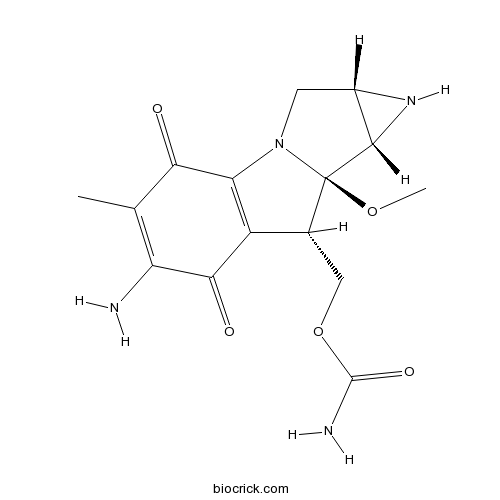
Mitomycin C
Rivaroxaban (BAY 59-7939) is a highly potent,selective and direct Factor Xa (FXa) inhibitor, achieving a strong gain in anti-FXa potency (IC50 0.7 nM; Ki 0.4 nM).
-
BCC3932
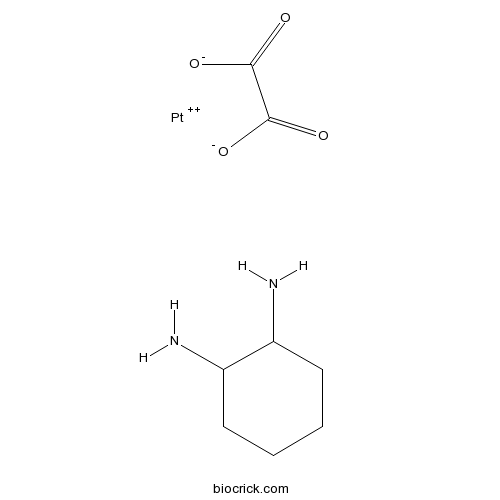
Oxaliplatin
Oxaliplatin is a DNA synthesis inhibitor. Oxaliplatin causes DNA crosslinking damage, prevents DNA replication and transcription and causes cell death. Oxaliplatin time-dependently inhibits human melanoma cell lines C32 and G361 with IC50 values of 0.98 μM and 0.14 μM, respectively. Oxaliplatin induces cell autophagy.
-
BCC7860
Puromycin dihydrochloride
Puromycin Dihydrochloride (CL13900 dihydrochloride), an aminonucleoside antibiotic, inhibits protein synthesis.

-
BCC4935
Ribavirin
Ribavirin (ICN-1229) is an antiviral agent against a broad spectrum of viruses including HCV, HIVl, and RSV.

-
BCC4839
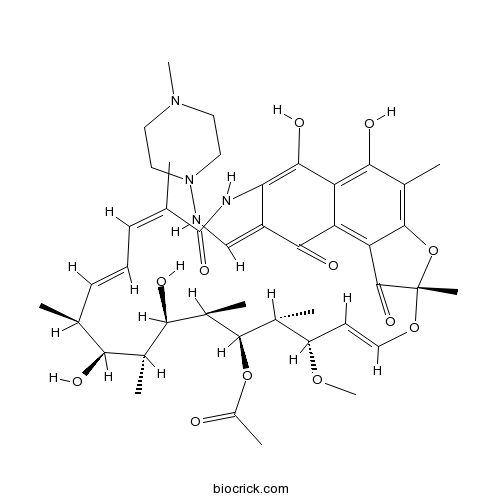
Rifampin
Rifampicin is a potent and broad spectrum antibiotic against bacterial pathogens. Rifampicin has anti-influenza virus activities.
-
BCC7621
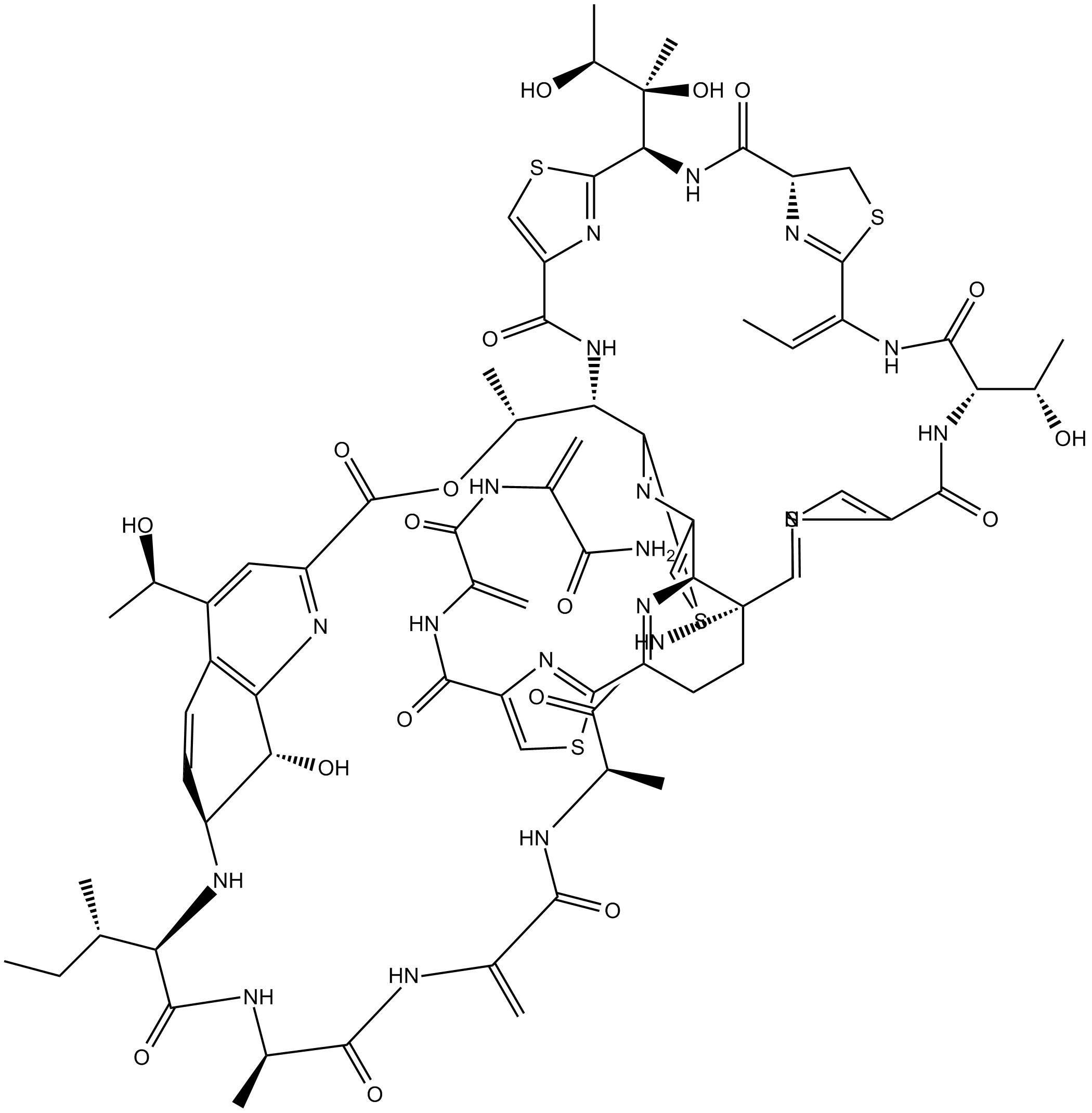
Thiostrepton
Thiostrepton is a natural cyclic oligopeptide antibiotic, is a natural product of the ribosomally synthesized and post-translationally modified peptide (RiPP) class.
-
BCN5984
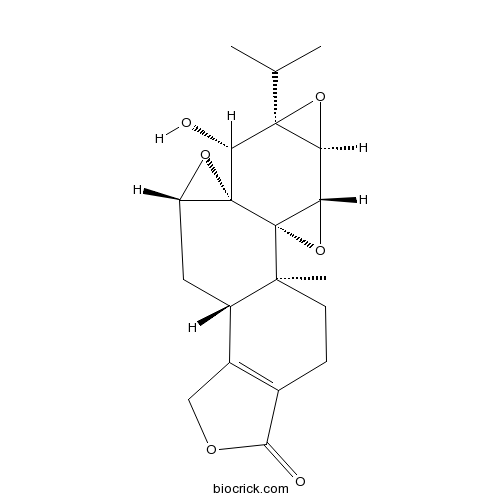
Triptolide
Triptolide is a diterpenoid triepoxide extracted from the root of Tripterygium wilfordii with immunosuppressive, anti-inflammatory and antiproliferative effects. Triptolide is a NF-κB activation inhibitor.
-
BCC3931
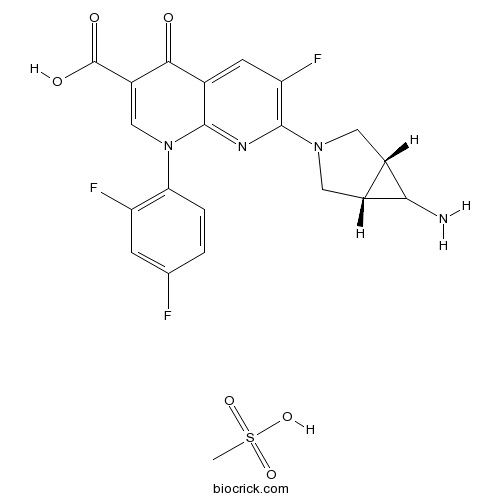
Trovafloxacin mesylate
Trovafloxacin mesylate is a broad-spectrum quinolone antibiotic with potent activity against Gram-positive, Gram-negative and anaerobic organisms. Trovafloxacin mesylate blocks the DNA gyrase and topoisomerase IV activity. Trovafloxacin mesylate is also a potent, selective and orally active pannexin 1 channel (PANX1) inhibitor with an IC50 of 4 μM for PANX1 inward current. Trovafloxacin mesylate does not inhibit connexin 43 gap junction or PANX2. Trovafloxacin mesylate leads to dysregulated fragmentation of apoptotic cells by inhibiting PANX1.